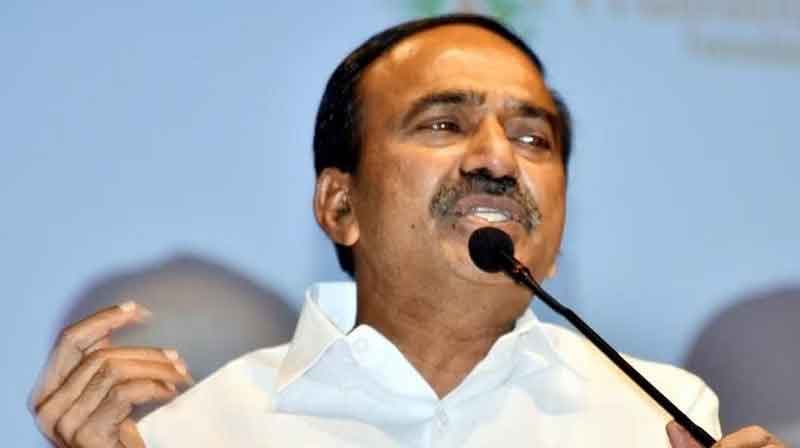
During a press conference in Hyderabad on Saturday, October 28, BJP MLA Eatala Rajender shared his perspective on the chief minister’s position in Telangana.He stated that as long as Chief Minister K Chandrashekhar Rao (KCR) remains in power, only family members within his circle are likely to assume the role of the state’s chief minister.
Rajender also mentioned that leaders from other communities may not have an opportunity to hold the chief ministerial position while KCR is in office.Additionally, he asserted that even the president of the BRS is expected to be chosen from the chief minister’s family.
Rajender further claimed that those overseeing the BRS units in other states will also be selected from the chief minister’s family, potentially limiting opportunities for individuals from diverse backgrounds.
Reflecting on the progress made since the establishment of Telangana as a separate state, Rajender expressed disappointment that only Chief Minister KCR’s family members secured prominent positions.
He observed that the lives of those who supported Kalwakuntla during elections did not witness significant changes.
Rajender criticized KCR for not appointing a Dalit as the chief minister of Telangana.
He pointed out that the BJP, on the other hand, played a role in appointing Narendra Modi, an OBC representative, as the Prime Minister of India, as well as Droupadi Murmu, a tribal woman, as the President of India.
However, Rajender highlighted his concern that the ruling BRS has not adequately addressed the needs of the BCs.
Joining the conversation, BJP OBC national president K Laxman remarked that both the BRS and the Congress have, in his view, not adequately addressed the interests of the BC community in the state.
Laxman also emphasized that the BJP has pledged to appoint a leader from the BC community as the chief minister of the state if the party secures victory in the Assembly elections scheduled for November 30.He called on the public to work together to bring an end to what he described as corrupt and dynastic rule in the state.