Seoul 24 Aug : South Korea’s fertility rate sank to the lowest level in history in 2021 while the rate of births continued to decline as data was released on Wednesday, highlighting the grim state of the nation’s demographics.The fertility rate of the country’s total — the amount of babies a woman can have in her lifetime was 0.81 children in 2021, a decrease from 0.84 the previous year, as per the statistics obtained from Statistics Korea.
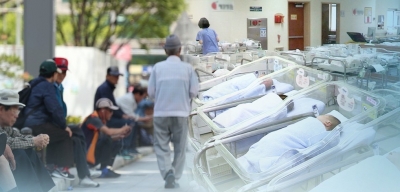
The number was the lowest since the agency began compiling the related data in 1970.The year of 2017 also marked the fourth consecutive year in which the number was less than one according to Yonhap News Agency.
South Korea was the only country in which the rate of births per women was less than one among the 38 member nations of the Organization for Economic Cooperation and Development (OECD).
As of 2020 the fertility rate of all the OECD nations was 1.59.
South Korea is grappling with a steady decline in births, as a lot of young people put off or stop trying to get married and having children amid the economic downturn and the high cost of housing, along with changing social norms regarding marriage.
The number of newborns reached an all-time low of 260,600, a decrease of 11,800 from 2011, the figures revealed.
The year-round number of births in the United States fell below 300,000 for the second consecutive year.
The 1970s saw the annual number of births was about 1 million, however it has been in a constant decrease, with the tally falling below 400 for the first time in 2017.
The country’s birthrate crude – the amount of births per 1000 people also hit the all-time lowest of 5.1 in 2021, lower than 5.3 in the year prior.
The average age of women having babies was 33.4 this year, an increase from 33.1 one year earlier, figures revealed.
The ratio of baby boys per 100 newborn girls was 105.1 in the year before, an increase from an all-time low of 104.8 the previous year.
In South Korea, the birth sex ratio was always over 100 due to its tradition of preferring male children.But it is declining with changes in social norms.
South Korea reported the first natural decline in number of people in 2020, when the numbers of deaths surpassed the number of newborns.
Experts raised concerns that the nation might be in danger of experiencing an “age earthquake” that could begin in 2030-40, a quake-like demographic shock resulting from a decline in the population and rapid ageing, if it does not address the issue in an appropriate manner.
South Korea’s working-age population projected to shrink by 35 percent in the next 30 years, due to the record-low birth rate and rapid aging according to a forecast provided by the government.