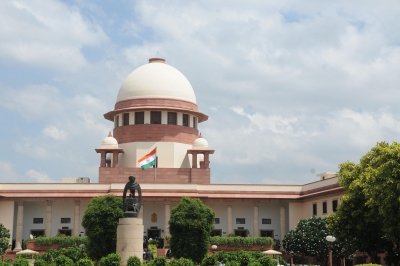
New Delhi, December 14, : .The Supreme Court ruled Tuesday that parties cannot be forced to resolve a dispute by the adjudicating and appellant authorities (NCLT and NCLAT) as per the Insolvency and Bankruptcy Code.The bench was composed of Justices D.Y.A.S.Bopanna and Chandrachud, a bench of Justices D.Y.said that the adjudicating authorities are only authorized to determine if a default occurred.The adjudicating authorities must decide whether to accept or deny an application based on its decision.The adjudicating authorities can only take these two actions in compliance with Section 7.5.An adjudicating authority can’t force a party in a proceeding to resolve a dispute.
Additionally, the bench stated that it was important to encourage settlements because the IBC’s ultimate goal is to promote the continuation and rehabilitation of corporate debtors as opposed to allowing them to liquidate.
The respondent was directed to settle all remaining claims by the end of three months.This left the door open for the original petitioners who were aggrieved at the settlement to bring fresh proceedings.
The IBC does not recommend such a course.The IBC itself is a code.
Both the adjudicating and appellate authorities are created by the statute.They are statutorily granted jurisdiction.
This statute confers authority and also defines, channels and limits the scope of this jurisdiction.It stated that while adjudicating and appellate authorities can facilitate settlements they are not able to direct them in the same way as courts of equity.”
It was first a question of whether or not the National Company Law Tribunal under Section 7 was right in dismissing the petition because it found that the corporate debtor had initiated the settlement process with financial creditors.
In an appeal, the top court rescinded the NCLT’s and NCATAT’s dismissal of a petition under Section 7 (IBC) for the invocation of Corporate Insolvency Resolution Processes (CIRP).
The genesis of the case arises from a master agreement to sell which was entered into between the respondent, IDBI Trusteeship Ltd and Karvy Realty (India) Ltd on June 22, 2014, in order to raise an amount of Rs 50 crore for the development of 100 acres of agricultural land.
In 2019, a number of appellants filed a Section 7 application before the NCLT, Bengaluru due to the respondent’s default in making the repayment of over Rs 33 crore.
The NCLT, in February 2020, disposed of the petition after noting that both parties had filed joint consent terms.However, not all the petitioners had given their consent on the settlement.
The tribunal directed the respondent to settle the matter within three months and allowed the original petitioners to approach it if they are still aggrieved.The petitioners moved the NCLAT, which supported the NCLT’s view.
The petitioners moved the top court challenging this order.
The top court reinstated the Section 7 petition before the NCLT for fresh disposal.
ss/vd
#NCLT #NCLAT #encourage #Delhi #Delhi #New Delhi #Panna