Islamabad 20 August : Changes in the climate could be attributed to “extraordinarily over normal rainfall” in Sindh and Balochistan provinces in the monsoon season currently, Pakistan Meteorological Department (PMD) officials claimed.Back-to-back heat waves in the southern regions of Pakistan in June and May this year caused an “strong summer-time low or heat high” in July that caused torrential rainfall in the southern part of Pakistan, Geo News reported citing PMD officials as declaring.
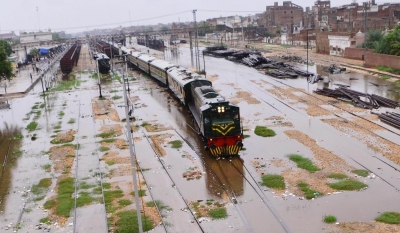
“This year the monsoon axis was in the southern part of the country whereas anti-cyclonic winds drove the majority of the monsoon systems towards the southern regions of the country.” Chief Meteorological Officer (CMO) of Sindh, Sardar Sarfraz said to The News.
Sindh received 385 percent more rainfall between the 1st of July between August 19 and July 1 this year The other province, Balochistan received 371 percent more rain in the same timeframe, PMD data showed.
In the month of August all by itself, Sindh received 495 per percent more rain, whereas Balochistan received 237 percent in the initial 19 days of the month.
“The monsoon systems that caused destruction in Sindh and Balochistan in this season were so powerful that they caused in rainfall in Afghanistan, Iran and the Middle East.This is a unique event and we need to keep an eye on it to see if it becomes a norm in the future,” Sarfraz told The News.
Numerous other meteorologists who are associated with PMD and different South Asian countries have been warning for the past few years that the warming of the Indian Ocean and the Arabian Sea could lead in severe weather conditions and heavy rains in the southern areas of Pakistan particularly the coastal regions of Sindh and Balochistan, Geo News reported.
Sarfraz stated that a variety of other factors, such as a lower than normal temperatures in the Pacific Ocean and high temperature in the Indian Ocean, also contributed to the heavy rainfall in Sindh as well as Balochistan.
It is important to research this pattern in order to determine whether the monsoon will continue to bring such rains in the near future, he added.
san/
.