By Asad Mirza The relations between Iraq and Kurdistan has deteriorated once more due to Kurdistan’s exports of oil to Turkey.
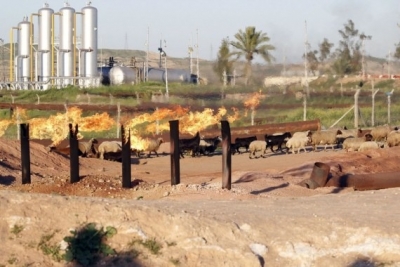
It is reported that oil companies from around the world that operate in Kurdistan have requested the US to assist in calming the escalating tension in tensions between Iraq’s central government and the Kurd Autonomous Region or Kurdistan regional government (KRG) according to a document seen by Reuters.
Over the decades, Kurdistan had been supplying oil to Turkey and in the current situation, they claim that intervention is necessary to ensure that oil continues to be transported from north of Iraq into Turkey to stop Turkey from having to increase the amount of oil it imports via Iran as well as Russia.
In addition, to a large extent, the economy of the Kurdistan region is dependent on exports of oil, since the financial support provided by Baghdad does not suffice to pay for the development projects of the region and a stoppage of the oil exports could pose an imminent threat to the economy, and could cause it to fall into a state of collapse.
In the beginning in February the Iraqi Federal Court deemed that an oil and gas law that regulated the oil industry in Iraqi Kurdistan was unconstitutional.In the wake of the rulings the Iraqi federal government has been adamant about the idea of allowing the KRG to export oil independently and has stepped up efforts to limit profits from exports from Kurdistan.
Reuters says it has copies of letters that show that oil multinationals reached out to US ambassadors in Baghdad and Ankara in January 2022, requesting mediation in an unrelated case that dates back to 2014 in relation to the Iraq-Turkey Pipeline (ITP).
Baghdad asserts that Turkey has violated the ITP agreement by bringing oil from Kurdistan that it believes is illegal, and subsequently pipelined to Ceyhan, the Turkish port of Ceyhan.
According to the oil ministry of Iraq, the last hearing in the case was held in Paris in July and the International Chamber of Commerce will issue a decision in the next few months.
In addition to the requirement for Turkey to purchase additional crude oil from Iran and Russia A cessation of oil flow through the ITP will lead to the economy of the KRG to collapse, according to oil companies sent a letters to US representatives stated.
Iraq is already reaping the benefits of the rising prices of oil that soared to 14-year highs after the world’s largest oil exporter Russia entered Ukraine in February.They remain at or near $100 per barrel.
The ITP can supply up to 900,000 barrels (bpd) of crude, about one percent of daily demand for oil in the world coming from Iraqi state-owned oil retailer State Oil Marketing Organisation (SOMO) and the KRG.At present, it pumps 500 bpd of oil from the northern Iraqi fields.
The oil multinationals have also lobbyed US congressmen to write letters to US Secretary of State Antony Blinken in August.State Department spokesperson Ned Price stated on August 16 that disagreements between Baghdad and Erbil were between two sides, however the US could be able to encourage dialogue.
Al Arabiya TV channel reporting on the issue reported Raad Alkadiri as the managing director of energy and climate change, as well as sustainable development at Eurasia Group, as saying that the US has withdrawn from Iraq over the last decade.So there is there is no demands from Washington or other governments can resolve the conflicts with Baghdad as well as the Kurds.
To complicate things further, the previous week, SOMO threatened legal action against international buyers of Kurdish crude and thereby increasing the risks that come with making investments in the region.This is just the latest move of Baghdad in the ongoing tensions with the KRG over who is in charge of Kurdistan’s oil.
Experts believe that Kurdistan could have its exports and production of oil cut in half in the next five years which will further drain the already depleted funds of the Kurdistan Regional Government (KRG).
The investment environment in Kurdistan is not favorable to large-scale oil industry investments, despite Kurdistan officials claim to the contrary amid a tense disagreement between the KRG and the federal government of Iraq over who is the best qualified to manage the revenues and oil resources in the semi-autonomous region.
An Kurdish official has described the conflict as the most tense conflict between Baghdad and Erbil in over 20 years.
Exports of oil account for more than 80 percent of the KRG budget and, without the revenue generated by oil, the region is facing more challenges in addition to of the budgetary limitations by the federal government in Iraq which is a caretaker cabinet since politicians have been unable to create an official government for more than one year following the general election of October 2021.
Without new investments in oil, Kurdistan risks losing half of its oil production in 2027, according to documents from the government that were reviewed by Reuters.
But attracting investors into Kurdistan once more is simpler to do than it is said to be.
In the 20th century Kurds in Iraq were constantly fighting independence.Kurds suffered Arabisation as well as genocide at at the hands of Ba’athist Iraq.
The Iraqi no-fly zones covering the majority of Iraqi Kurdistan following March 1991 offered the Kurds the chance to play with self-government and the autonomous region was established in the end.
The Baghdad government only recognized the autonomy of the Kurdistan Region after the fall of Saddam Hussein, with the adoption of a revised Iraqi constitution in 2005.A referendum on independence was non-binding approved in September 2017 to mixed international reactions.The Kurdistan Region largely escaped the sufferings of the last few years of Saddam Hussein’s reign and the chaotic aftermath of his deposing in 2003.
It also established an parliamentary democracy with an expanding economy.
It appears that it is time for the international community to join forces to ensure that Kurdistan’s independence is secured completely from Iraq and let the country begin its journey towards prosperity and democracy.
asad/
.